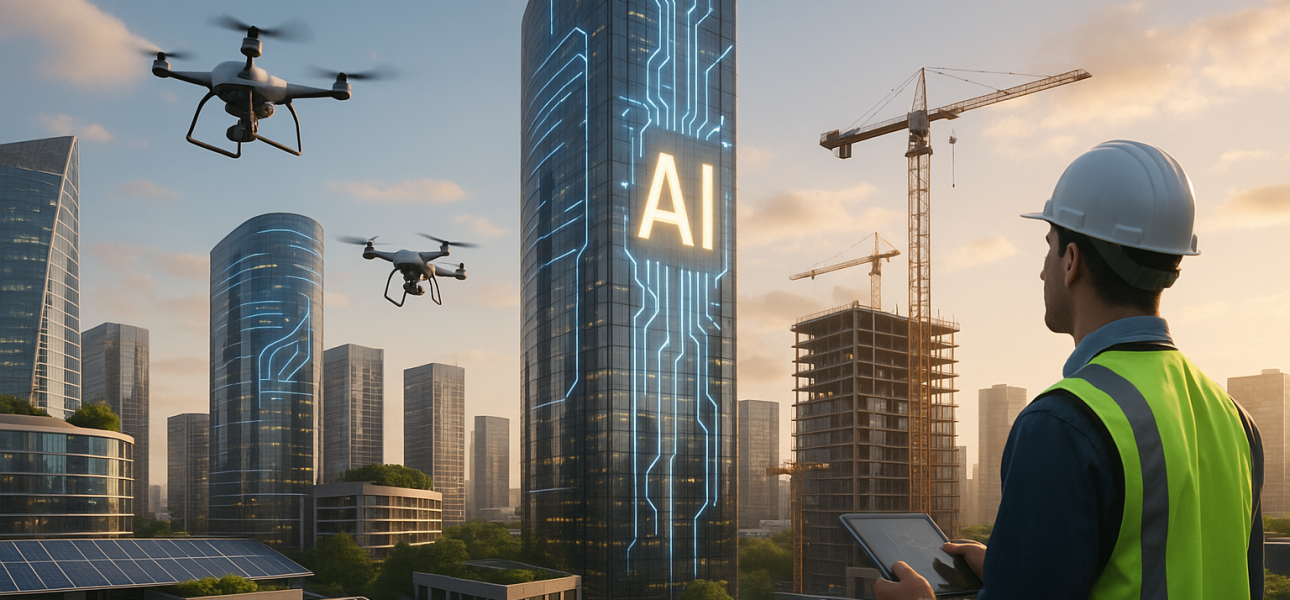
AI in Real Estate and Construction: Transforming the Future of Building
Artificial Intelligence (AI) is no longer just a buzzword—it is reshaping industries worldwide, and real estate and construction are no exception. From smarter property management to efficient construction planning, AI is driving innovation, reducing costs, and improving customer experiences.
- Smarter Property Search and Investment Decisions
AI-powered platforms analyze market trends, property values, and rental yields to help investors make data-driven decisions. Predictive analytics can forecast demand in specific areas, identify undervalued assets, and guide buyers toward profitable investments.
- Virtual Assistants and Customer Experience
Chatbots and AI-driven virtual assistants are enhancing customer interactions. They can answer queries 24/7, schedule property visits, and provide personalized property recommendations—making the home-buying journey more efficient and engaging.
- Predictive Maintenance and Smart Buildings
In property management, AI systems monitor building performance and detect issues before they escalate. Smart sensors track energy usage, air quality, and equipment performance, ensuring timely maintenance, lower operating costs, and improved tenant comfort.
- Design and Planning Optimization
AI tools assist architects and engineers in creating optimized designs. Generative design software evaluates multiple layout options based on sustainability, cost, and efficiency. This shortens design cycles and results in smarter, more functional buildings.
- Construction Automation and Robotics
AI-driven robots are increasingly used in repetitive construction tasks such as bricklaying, welding, and concrete pouring. Combined with drones, AI enhances safety monitoring, site inspections, and progress tracking—reducing human error and improving productivity.
- Risk Management and Safety
AI analyzes past project data to predict risks such as cost overruns, delays, or accidents. Wearable technology integrated with AI can track worker health and location in real-time, ensuring safety compliance and reducing workplace hazards.
- Sustainable and Eco-Friendly Construction
AI helps optimize resource allocation, reduce material waste, and design energy-efficient buildings. By simulating environmental performance, AI supports green building certifications and sustainable development goals.
- Smart Contracts and Real Estate Transactions
Blockchain integrated with AI is transforming transactions. Smart contracts automate processes like lease agreements, payments, and compliance checks, reducing fraud and speeding up transactions.
Conclusion
AI is revolutionizing the real estate and construction industries by making processes smarter, safer, and more efficient. From property search to building design and on-site construction, AI empowers stakeholders to save time, reduce costs, and create sustainable developments.
As adoption grows, AI will not just be a tool but a core driver of growth—helping shape the future of real estate and construction.